
If you've started noticing damp patches, peeling paint or mould inside your home, it's natural to assume the problem is coming from inside the property.
However, in many cases, the cause is actually outside.
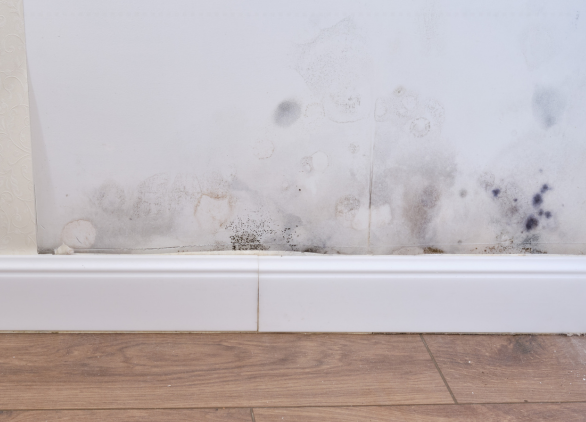
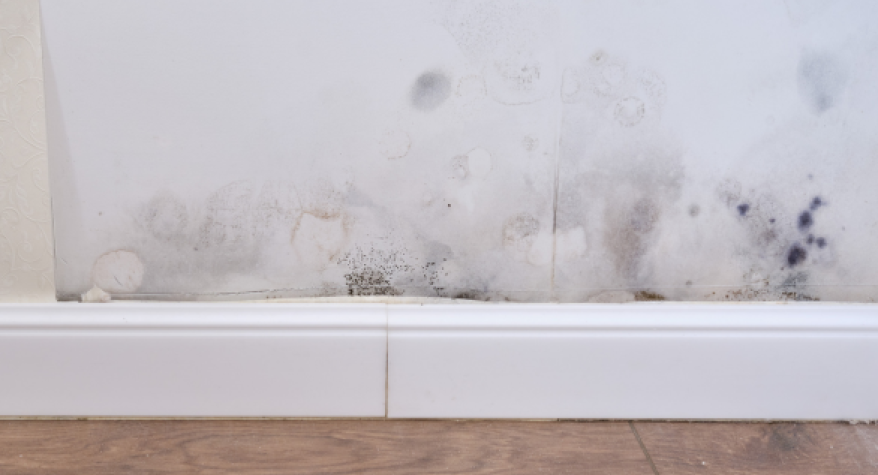
Yes, damaged external render, cracked pebble dash, defective pointing, ageing roofs and other external defects can all allow moisture to penetrate a property over time.
We recently completed a full home renovation project on Edgell Road in Staines-upon-Thames that demonstrates exactly why it's so important to identify the cause of damp rather than simply treating the symptoms.
What Are the Signs That Damp Could Be Coming From Outside?
One of the first things we look for during an initial site visit is whether the internal damp corresponds with defects on the outside of the property.
On this particular project, Jason invited me to inspect his home because he had noticed increasing signs of damp internally.
As we walked around together, he pointed out several areas where moisture was becoming increasingly noticeable inside the house.
Once we inspected the outside, it quickly became apparent that the property's ageing external finishes were likely contributing to the problem.
The pebble dash had reached the end of its useful life and the exterior generally looked as though very little had changed since the property was originally built.
What impressed me most was Jason's attitude.
Although he knew improving the appearance of the house would be a huge bonus, his priority wasn't cosmetic.
He wanted to understand why the damp was occurring and make sure whatever work was carried out actually solved the problem rather than simply covering it up.
For me, that's always the right approach.
Why We Decided Against External Wall Insulation
As the existing pebble dash had to be removed, we naturally discussed whether external wall insulation should also be installed while everything was exposed.
Jason had already done quite a bit of research before I first visited and understood the advantages of insulating externally.
Initially, he was very keen to go ahead.
However, after several conversations together, we looked at the wider picture.
One of the things Jason really loved about his home was its original character, particularly the detailing around the windows and doors.
Adding external insulation would have covered those original features and fundamentally changed the appearance of the property.
When we weighed that against the additional investment required for external insulation, Jason ultimately decided to retain the original architectural details and proceed with a high-quality silicone render system instead.
It wasn't simply a financial decision.
It was about preserving the character of a home he genuinely loved.
Why We Recommend a Silicone Render System
Because Jason had already researched silicone render systems before our first meeting, our conversations weren't about convincing him to choose one.
Instead, we discussed why it was the most appropriate solution for his particular property.
Silicone render offers excellent weather protection, is highly breathable and requires very little maintenance compared with traditional finishes.
Combined with careful preparation of the existing walls, it provided the best long-term solution for resolving the external defects while completely transforming the appearance of the house.
Every Design Decision Was Connected
As the project developed, it became clear that this wasn't simply going to be a rendering project.
Jason loved his home.
He wanted to modernise it without losing the details that gave it character.
That meant every decision influenced the next.
The render colour influenced the brick slip selection.
The render colour influenced the roof tile choice.
The roof and render colour influenced the new boundary wall brick choice.
The new boundary wall influenced the landscaping and entrance design.
Rather than treating each element as a separate project, we looked at the property as one complete transformation.
Looking back, I genuinely believe that's why the finished result works so well.
Why It's Worth Inspecting Your Roof While Scaffolding Is Already Up
One piece of advice I'd give almost any homeowner is this:
If scaffolding is already being erected for major external works, it's often worth taking the opportunity to properly inspect your roof.
That's exactly what we did here.
Before carrying out a physical inspection, we completed a drone survey which immediately highlighted evidence of numerous historic repairs.
That alone suggested the roof deserved a much closer look.
Once the rendering had been completed, we used the existing scaffolding to carry out a full physical inspection and produced a detailed report for Jason explaining everything we found.
What We Discovered Beneath the Roof Tiles
Initially, Jason wasn't particularly pleased when I explained that we'd identified concerns with the roof.
That's completely understandable.
Nobody wants unexpected news during a renovation project.
However, he also knew there had always been a possibility that the roof might require attention because of other issues he'd inherited when buying the property.
When the roof coverings were removed, the true condition of the structure became apparent.
Large sections of the roof timbers had suffered from prolonged water ingress.
Many timbers showed extensive woodworm damage.
Most significantly, the main ridge beam had deteriorated so severely through rot that very little of its original section remained.
These weren't defects anyone could have identified from ground level.
They only became visible once the roof had been carefully stripped back.
Throughout the inspection we photographed and filmed everything before producing a detailed written report explaining our findings.
Although the outcome wasn't what Jason had hoped for, having clear photographic evidence allowed him to fully understand the condition of the roof and make an informed decision to replace the roof structure completely.
Sometimes evidence makes a very difficult decision much easier.
What Homeowners Can Learn From Jason's Project
One thing this project reinforced is that damp should never simply be treated as an isolated issue.
Internal damp is often the symptom rather than the problem itself.
Taking the time to investigate the external condition of the property thoroughly can reveal issues that would otherwise remain hidden for years.
Equally, if scaffolding is already in place, it's a sensible opportunity to inspect parts of your home that are normally difficult and expensive to access.
In Jason's case, what started as an investigation into damp ultimately uncovered significant roof defects that could now be repaired properly while access was available.
Thinking About Renovating Your Home?
Every property has its own story, and every project starts with understanding what's causing the problem before deciding how to fix it.
If you're experiencing damp issues, planning an external renovation or considering a full home refurbishment in Staines-upon-Thames or the surrounding Surrey area, get in touch today - we'd be happy to visit your property, discuss your concerns and provide honest, practical advice based on real experience.
Sometimes the most valuable part of our job isn't carrying out the work itself.
It's helping homeowners understand what's really happening behind the surfaces they can't see.